|
|
 |
|
|
|
Police Books
|
|
|
Bryan Vila
|
|
|
|
|
|
|
Bryan Vila was a member of the United States Marine
Corps from 1964 to 1967. His military service included a tour in Vietnam. In 1969, Bryan Vila joined the
Los Angeles County Sheriff’s Department. By the time he left the Los Angeles County Sheriff’s
Department in 1978, he had attained the rank of sergeant. He continued this law enforcement career for
“six years as a police chief helping the emerging nations of Micronesia develop innovative law enforcement strategies,
and two years in Washington, D.C., as a federal law enforcement officer.” Currently, “Bryan
Vila, PhD, is a professor of criminal justice at WSU Spokane. Prior to joining WSU in July of 2005, he directed the Division
of Crime Control and Prevention Research at the U.S. Department of Justice’s National Institute of Justice.”
|
|
|
Bryan Vila is the co-author of three books:
Capital Punishment in the United States: A Documentary History; The Role of Police in American Society: A
Documentary History; and, Micronesian Blues: The Adventures of an American Cop in Paradise.
And, the author of Tired Cops: The Importance of Managing Police Fatigue.
According to the book
description of Micronesian Blues: The Adventures of an American Cop in Paradise, “Training
competent, independent police forces in developing nations is critical to U.S. efforts to promote democracy and stability
worldwide. Yet all too often we simply take American cops or military troops, drop them into the middle of a foreign land,
and leave them to figure out the enormous challenges of cross-cultural police training on their own.
Three decades ago, in the tropical island setting of Micronesia, Bryan Vila was
one of these trainers. After serving as a Marine in Vietnam and then working as a street cop in the ghettos and barrios of
Los Angeles for nine years, he expected the job to be a paid vacation in paradise. He couldn't have been more wrong.
Micronesian Blues tells the true story of Bryan's six years directing the development
of law enforcement in Micronesia during the tumultuous period when this former U.S. Trust Territory was making the transition
to independence. Through lively narrative laced with wry humor, it chronicles his adventures and misadventures as he discovers
the do's and don'ts of cross-cultural policing through trial and error on Saipan, Ponape, Truk, Palau, Yap, Kosrae, and Kwajalein.
An instructive postscript details the
ten most important lessons Bryan learned during his time in Micronesia and how they apply to any cross-cultural police training
situation, including today's global hot spots. These lessons make Micronesian Blues more than just an entertaining collection
of true adventures—it's an eye-opening read for cops, military personnel of all ranks, public policy-makers, academics,
and general audiences alike.”
One reader of Micronesian
Blues: The Adventures of an American Cop in Paradise said, “If you're looking for an enjoyable way to
gain some critically important insights into the subtleties and challenges of contemporary policing, this is the book for
you. If I was a physician, I'd prescribe a chapter a day for two weeks if you need to cure any "blues," because
Micronesian Blues is a thoroughly entertaining read. I'd particularly recommend it to anyone who wants to understand what
it takes to be an effective police officer, trainer or leader. The lessons learned during six years of policing Micronesia
apply equally as well to community policing and police training here in the US given our increasingly diverse and complex
nation, as much as they do to cross-cultural police training assignments abroad.”
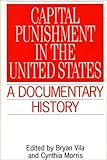
According to the book description of Capital
Punishment in the United States: A Documentary History, “Both sides of the highly charged capital punishment
debate in the United States are examined in this breakthrough collection of 112 key documents, arranged by historical period.
The political and social aspects of the debate are represented through a wide range of documents, including congressional
hearings, Supreme Court decisions, position papers, biographical accounts, and news stories. An explanatory introduction precedes
each document to help readers understand how various and seemingly unrelated social, economic, and political factors have
impacted public attitudes, legislation, and judicial decisions pertaining to capital punishment.”
One reader of Micronesian
Blues: The Adventures of an American Cop in Paradise said, “Vila and Morris have created a new genre!
Micronesian Blues delivers Carl Hiaasen-quality entertainment with Sage-style academic insights. The book resonates with numerous
audiences. Do you like island adventure stories? Do you like politics with a bit of satire and caricature? Do you like a little
touch of romance? Do you like critical perspectives on international development policy? Do you like to laugh or think? If
you answered "yes" to any of these questions then Micronesian Blues is for you... My wife and I read it for fun
while vacationing in the Caribbean. Now I'm going to use it as a text in my "Police and Contemporary Society" course.
It's as close as you get to a one-size-fits-all read. There's something for everyone.”
One reader of Capital Punishment in the
United States: A Documentary History said, “This book by Vila and Morris provides a uniquely impartial
look at capital punishment in the USA through the words of the people who have most influenced the evolution of the debate
during the past 3.5 centuries; and the editors use excerpts from more than 100 original source documents to accomplish this
mission. Instead of telling us what to believe, they help us to develop our own opinions by providing these excerpts covering
a variety of perspectives, and describing the political, social, and economic context in which the documents were recorded.
We find that the volume is divided into six chapters - each covering a different era in the evolution of the death penalty
debate. I found that there was a balanced selection of documents from a myriad of perspectives, and the materials were presented
in a non-adversarial way. I enjoyed the book immensely. Who can use this book? First of all, political and human rights activists
like myself, and of course, researchers, students, educators, speechwriters, members of the Criminal Justice System, prisoners,
and concerned citizens. The book is well worth "a read" over several evenings, and will make us more aware of the
highly charged issues dealing with capital punishment.”
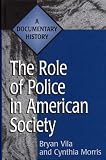
The Library Journal Said of The Role of
Police in American Society: A Documentary History, “Policing deals with central issues of social control.
Vila and Bryan (Capital Punishment in the United States: A Documentary History, Greenwood, 1997) have produced a documentary
history of policing in America and provide a chronological analysis of "how the issues, concerns, and ideals of police
officers, chiefs, reformers, and researchers have changed over time." Their careful selection of important primary documents
ranges from early police activities in 17th- and 18th-century America through conflicting expectations of the police role
from the 1960s to the present. Each of the seven parts contains a brief introductory essay that outlines main themes found
in the 95 documents. Most of these are summarized in two or three pages and represent a variety of viewpoints. This book is
part of a series that makes available in one volume key primary documents on a given historical event or contemporary issue.
Criminal justice practitioners and professionals can use this to identify key trends, and the general public will gain an
understanding of changing police roles in American society.”
|
|
|
|
One reader of The Role of Police in American
Society: A Documentary History said, “If you have a dual interest in history and law enforcement, this
is the book for you. This volume chronicles the history of USA policing from colonial times to present, via 95 original documents.
Each document includes an introduction placing it in a historical, social, and political context, often including very interesting
biographical information. Unlike most books on the history of the police, this book tells the story in the words of the people
who were involved in the struggle to enforce the laws, uphold the ever-changing Constitution, maintain safe and stable communities,
and create truly efficient and effective police. Because the views are from a variety of perspectives, the reader is encouraged
to decide for himself or herself what the role of the police should be, or what it will become. Special features include a
timeline of important events in the history of policing in the United States, a glossary of legal and other terms in the book,
a listing of police and police-related groups and organizations, US Supreme Court cases relevant to the role of the police,
as well as a select bibliography of books, articles, and other particularly useful documents. In general, I found that the
book did an excellent job in discussing the changing role of police in our history, and that we come to understand that the
police are a reflection of the society in its position on the timeline, i.e., in a poetic sense, "a direct reflection
of society's heart". The book is an important source of facts, figures, and quotes on American policing for researchers,
police scholars and students, police chiefs and police officers, teachers, journalists, government officials, and especially
for those who enjoy history, as well as being passionate about law enforcement issues. I liked the book and would recommend
it to fellow law enforcement officers.”
According to a reader of Tired Cops: The
Importance of Managing Police Fatigue, “For many reasons discussed in this book, Dr. Vila espouses the
theme, "good cops don't let tired cops hit the streets." He presents a well-written and documented book that
encourages law enforcement officers at all levels to make proper sleep and rest as important in survival as training with
firearms and the safe operation of vehicles. Vila's research and studies show that fatigue from sleep loss, disruption
of natural body rhythms (circadian), and other factors, such as diet and overtime, can have serious negative effects. For
one thing, fatigue worsens mood; tired police officers get irritable and short-tempered just like other people. Fatigue also
may increase the possibility of officers involved in official misconduct and jeopardizing the positive relations between themselves
and their families, and eventually the community. I sincerely believe that law enforcement agencies should add this book to
their libraries for research, reference, and as a tool to explain uncharacteristic behaviors of some officer. Dr. Vila did
a good job with this one.”
According
to a reader of Tired Cops: The Importance of Managing Police Fatigue, “I am a student
at the University of Wyoming and for a readings class with Bryan Vila, he gave me this book and told me to read it and write
a paper on it. So, maybe this review is a little biased, but it is an honest review. Dr. Vila had talked about his research
for this book numerous times over the past several years in the classes I've taken from him, but this was the first chance
I had to read any of the material he had gathered and written down. It all came together in this book. And everything he said
and found in his research is 100% true and accurate. The book is well composed and I was excited to see the finished product
of all his hard research over the years. It all came together nicely Bryan, and it is a great start. I know you still want
to do so much more with this topic. Thanks for being such a great teacher and I look forward to working with you more as I
pursue a masters.”
About the Los Angeles County
Sheriff’s Department
The Los Angeles Sheriff's Department
is the largest sheriff's department in the world. In addition to specialized services, such as the Sheriff's Youth Foundation,
International Liaison and Employee Support Services, the Department is divided into ten divisions, each headed by a Division
Chief.
There
are three patrol divisions (Field Operations Regions I, II and III), Custody Operations Division, Correctional Services Division,
Detective Division, Court Services Division, Technical Services Division, Office of Homeland Security, Administrative Services
Division, and Leadership and Training Division.
The Sheriff's Department of Los Angeles
County was formed in April, 1850. Elections for the office of Sheriff were held annually until 1882, when the term was increased
to two years; in 1894 the term was increased to four years. The first Sheriff of Los Angeles County was George T. Burrill
and his staff consisted of two Deputies.
Twenty-four men have served Los Angeles
County as Sheriff since 1850: nineteen were elected and six were appointed by the Board of Supervisors to serve the unexpired
term of their predecessors. Two were killed in the line of duty. Of those appointed, four were re-elected to the office. The
youngest man ever elected to the office of Sheriff was William B. Rowland, who was sworn in when he was 25 years old (in 1871),
and was re-elected three times. The record for the longest consecutive service goes to Sheriff Eugene Biscailuz, who completed
51 years in the department, from deputy in 1907, to being appointed Sheriff in 1932 and then retiring in 1958. Our previous
Los Angeles County Sheriff, Sherman Block, entered the department as a Deputy Sheriff in 1956 and continued up through the
ranks until he was appointed by the Board of Supervisors to succeed Sheriff Pitchess in 1982. In June of 1982, Sheriff Block
was elected to a full four year term as Sheriff of Los Angeles County.
Source:
lasd.org/
lasdabout.html
lasd.org/
aboutlasd/history.html
|
|
|
|
|
|
|