|
Edward Nowicki is the Executive Director
of the National Criminal Justice Training Council (NCJTC) and 33 year law enforcement veteran, in addition to being one of
the founders and the first Executive Directors of the American Society of Law Enforcement Trainers (ASLET). He holds a B.S.
in Criminal Justice and an M.A. in Management. A recipient of many prestigious awards, Ed has been judicially recognized as
a Use of Force Expert in many courts across the nation and he has taught various use of force programs both across the nation
and internationally. He developed the Use of Force Program and is a Master Instructor in both the OCAT Program and the Handcuffing
Program, in addition to being an Instructor Trainer with the Tasertron TASER. Edward Nowicki is a survivor of six separate
shooting incidents, and he has authored a number of books and over 200 law enforcement articles.
Edward Nowicki is the author of True Blue:
True Stories about Real Cops; Supervisory Survival: A Practical Guide for the Professional Survival of New, Experienced, and
Aspiring Law Enforcement Supervisors; Street Weapons: An Identification Manual for Improvised Unconventional, Unusual, Homemade,
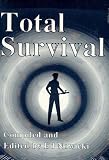
Disguised and Exotic Personal Weapons; and, Total Survival: A Comprehensive Guide for the Physical, Psychological, Emotional,
and Professional Survival of Law Enforcement Officer.
According to one reader of Street Weapons:
An Identification Manual for Improvised Unconventional, Unusual, Homemade, Disguised and Exotic Personal Weapons,
“This book is a must for anyone who wants to build homemade weapons from pistols to submachine guns. It is very useful
book if you want to disguise your gun for personal protection. It shows you many different kinds of weapons. This book is
good for anyone who owns a personal gun.”
According to another reader of Street Weapons:
An Identification Manual for Improvised Unconventional, Unusual, Homemade, Disguised and Exotic Personal Weapons,
“LOVE THIS BOOK!!! Was doing some research on knife designs because I am in the business and bought this book along
with several others and this one was by far one of my favorites. Great pictures (which is what I needed) and some awesome
descriptions. I highly recommend this book if you are in the business or are in police work of any kind.”
One reader of Total Survival: A Comprehensive
Guide for the Physical, Psychological, Emotional, and Professional Survival of Law Enforcement Officers said,
“There are some books in professional fields that stand the test of time. In the law enforcement profession, Total Survival
is a classic. If you are a law enforcement officer who is serious about winning on the street, in court and in your own personal
development, this is a book that should be in your own library. Total Survival was the idea of Ed. Nowicki, who is the National
Director of ILEETA(International Law Enforcement Educators and Trainers Association). Ed. organized the leading law enforcement
trainers to write a chapter on one of their specialized areas. The forty five chapters of this 524 page tome cover a wide
range of areas related to officer survival. Don't let the fact that this book was published in 1993 discourage you. Most
of contributors are still active in the police training field and belong to ILEETA. For those who do not know about ILEETA,
it is a professional law enforcement association in which ONLY those who are involved in providing law enforcement people
training. The forty five chapters are written by a who's who in law enforcement training. All the topics covered deal
with important aspects of officer survival. This short review cannot do justice to the vast amount of information this fantastic
book contains. This book is an excellent reference source and is a volume you will want to keep in your personal library.”
|
|
 |
|
According
to the book description of True Blue: True Stories about Real Cops, “A collection of
true stories about cops discusses the death of partners, courageous rescues, danger on the job, split-second decisions, and
more.”
About the
Chicago Police Department
On January 31, 1835,
the State of Illinois authorized the Town of Chicago to establish its own police force. On
August 15, Orsemus Morrison is elected Chicago's first constable, assisted by Constables Luther Nichols and John Shrigley.
The three-man police force serves and protects a population of about 3,200. The Police Department pre-dates Chicago as a city.
Today, the Chicago Police
Department is the second largest in the United States, serving approximately 2.9 million residents within the 228 square miles
that constitutes the City of Chicago. The Chicago Police Department had, at the
end of 2005, 13,323 sworn police officers and over 2,000 civilian personnel.
The Chicago Police Department
is divided into 25 police districts. Each district has between 9 and 15 police
beats, with a total 281 beats throughout the city of Chicago. Each of the 25 police districts is led by a district commander
who, in addition to uniformed police officers, has teams of undercover tactical and gang police officers at his or her disposal. The Chicago Police Department Districts are organized into five larger organization
entities called Areas. These area commanders report to the Bureau of Patrol.
In addition to the Bureau
of Patrol, the Chicago Police Department has four other bureaus: Bureau of Investigative Services; Bureau of Strategic Deployment;
Bureau of Crime Strategy and Accountability; and, the Bureau of Administrative services.
Instead of a Chief of Police, the Chicago Police Department has a Superintendent of Police; and, the Bureau commanders
hold the rank of Deputy Superintendent.
|
|
|
|
|