|
James Botting served in the FBI for
twenty-five years, sixteen as a crisis/hostage negotiator. He served as the team leader of the FBI’s Crisis Negotiation
Team (CNT) from 1981 to 1995 and a supervisory member of its international Critical Incident Negotiation Team since its inception
in 1985 until his retirement. He has personally negotiated numerous hostage/barricade incidents and responded to several high-profile
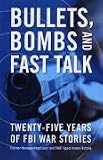
events. He lives in California. James Botting is the author of Bullets, Bombs, and Fast Talk:
Twenty-Five Years of FBI War Stories.
According to the book description of Bullets, Bombs, and Fast Talk:
Twenty-Five Years of FBI War Stories, “A desperate gunman holds a planeload of innocent passengers hostage.
A heavily armed cult leader refuses to leave his compound, threatening mass suicide by a hundred of his brainwashed followers.
A neo-Nazi militant in a cabin hideout keeps federal agents at bay with gunfire. A baby disappears; his only trace is an ominous
ransom call to his parents. Prisoners riot, threatening the lives of prison officers and hundreds of other inmates. How do
you react? What do you do? What do you say? Your words, your actions can save lives--or lose them.”
James Botting faced these challenges and daily pressures during a fascinating
and demanding twenty-five-year career as an FBI hostage negotiator. He found himself involved--sometimes peripherally, more
often personally--in many of the FBI's most famous events since the 1970s. From Ruby Ridge to Waco, Patty Hearst to Rodney
King, and Wounded Knee to TWA 847, Botting was there and on the spot. Along the way hostage negotiation techniques evolved,
changing from play-it-by-ear and shoot-from-the-hip to a carefully choreographed psychological game of life and death. Botting
was involved every step of the way.
In Bullets, Bombs, and Fast Talk: Twenty-five
Years of FBI War Stories, Botting vividly describes these events and more as only a participant can. He reviews the successes
and the times the FBI fell short. He chillingly recounts a number of times when death seemed inevitable, only to come through
unscathed. Botting pulls no punches with this gritty, detailed, and often humorous insider's account of life at the end
of a gun as an FBI hostage negotiator.”
Kirkus Reviews said of Bullets, Bombs, and Fast Talk: Twenty-Five
Years of FBI War Stories, “First-person, you-are-there law-enforcement adventure saga by a male agent
who wielded guns, solved crimes and sometimes saved lives.
Botting joined the FBI in 1971 after earning advanced college degrees, serving
in Vietnam and working as an investigator for the U.S. Treasury Department. With that background, he was well prepared for
dicey situations, but poorly prepared for the racial tensions that simmered in Mississippi, site of Botting's first FBI
posting. "Y'all just don't understand. You're a goddamn Yankee, boy," the Michigan-born author heard
constantly that first year; only a transfer to the Los Angeles office kept him from quitting. (He remained with the Bureau
until 1995.) Placed in the Violent Crimes and Major Offenders unit, Botting was near the center of action at episode after
episode that made headlines. Those cases included the pursuit of heiress Patty Hearst after her abduction by the Symbionese
Liberation Army; the standoff with Randy Weaver at Ruby Ridge, Idaho; the murderous debacle in Waco, Texas, that resulted
in the deaths of David Koresh and many of his blindly loyal Branch Davidian followers; plus dozens more. Occasionally, Botting
provides an education in handling the stresses of high-stakes police work, as when he explains why it's significant when
a ransom note doesn't arrive after a confirmed kidnapping. More frequently, he offers little education but plenty of titillation.
A conscious and careful stylist--unlike many law-enforcement agents who become authors--Botting knows when to inject humor,
however dark, into a grim account. He doesn't provide much documentation for his exploits, but he exudes credibility--at
least between the covers of the book.
Vivid presentation of stories so dramatic
that they fully justify the old saw that truth is stranger than fiction.”
|
|
 |
|
One reader of Bullets, Bombs, and Fast Talk: Twenty-Five Years of
FBI War Stories said, “Actual crisis situations and investigations as told, in a language that everyone
would understand, by a real street agent who took on ancillary duties as a Hostage/Crisis Negotiator and a SWAT team member.
These "war stories" depict the good and, at times, the bad about the FBI.
Thanks to dedicated and street smart
agents like the author, most were good and lives were saved. In one of the chapters, the author's explanation
of "T.U.R.D.S. and S.H.I.T.S" should bring a smile to your face. A good read!”
Bob Hammer (author of Last Undercover)
said of Bullets, Bombs, and Fast Talk: Twenty-Five Years of FBI War Stories, “Full disclosure...I
was an FBI agent and worked in the L.A. office when Jim Botting was also assigned there. We knew each other but never worked
together. He was known as a great agent and I now I know he is a great writer. BULLETS, BOMBS and FAST TALK is a well-written
journey through a lifetime of FBI war stories. Jim was on the front lines of some of the biggest investigations in our nation's
history. This is an easy read that provides insights into how the Bureau functions...warts and all. Perfect for true-crime
junkies.”
About the Federal Bureau of InvestigationThe FBI originated from a force of Special Agents
created in 1908 by Attorney General Charles Bonaparte during the Presidency of Theodore Roosevelt. The two men first met when
they both spoke at a meeting of the Baltimore Civil Service Reform Association. Roosevelt, then Civil Service Commissioner,
boasted of his reforms in federal law enforcement.
On July 26, 2006, the Federal Bureau of Investigation celebrated 98 years of public
service. On that day in the year 1908, Attorney General Charles Bonaparte ordered 9 newly hired detectives, 13 civil rights
investigators, and 12 accountants to take on investigative assignments in areas such as antitrust, peonage, and land fraud.
Today, that small group of 34 investigators has grown into a cadre of over 30,000 employees.
Source:fbi.gov/libref/historic/history/origins
|
|
|
|
|