|
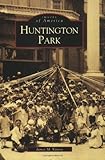
According to the book description of
Huntington Park,
“Originally part of the Lugo family’s
vast Rancho San Antonio, Huntington
Park evolved at the beginning of the
20th century because enterprising
developers A. L. Burbank and E. V.
Baker gained control of 100 former
rancho acres called the Sunrise Tract.
First renamed La Park, this land just
south of Los Angeles was later called
Huntington Park, after Burbank and
Baker granted tycoon Henry Huntington
a right-of-way to put his railway line
along Randolph Street in 1902.
Incorporated in 1906, the city of
Huntington Park became a significant
freight station for cargo coming to
and going from Los Angeles. A
working-class suburb throughout its
first century, the nicknamed “City of
Perfect Balance” saw a population
shift beginning in the 1970s. Latinos
have assimilated into the community’s
fabric, revitalizing the busy central
business district of Pacific
Boulevard. Huntington Park is a
central hub of the Latino community in
Los Angeles County.”
One reader of Huntington
Park said, “My grandpa
(79) and my dad (54) LOVED this book
and all the pictures. They can
remember so much of Huntington Park
already, but seeing the look on their
faces and they looked through the
photos in this book, and the memories
and history, it was great. It was like
they were home again. I love these
books on all the different regions. I
have found so much useful information
and history on all our surrounding
areas from these books. Well done.
What a great idea to have books on all
different cities, towns, neighborhoods
- it seems they don't leave anyone
out. Thanks for making my grandpa and
my dad two very happy boys.”
One reader of Huntington
Park said, “I lived in
Huntington Park from 1953-1968 and
went to Middleton Street School, Gage
Junior High, and Huntington Park High
School and then I moved away and only
returned once about 7 years later. I
have a lot of memories of Huntington
Park so was interested to read this
book and I learned a lot about the
city that I hadn't known. I still have
all my HPHS year books from those
years. We lived on Roseberry Avenue
which was a few blocks from the Owl
Market on the corner of Santa Fe and
Florence Avenue - that's gone now as
are a lot of the places that were
familiar. The place is totally
different now, about 99% Hispanic;
I've heard even the city officials
speak nothing but Spanish at their
meetings. Pacific Blvd. was the place
to be - Sav-Ons sold ice cream cones
for 5 cents each. It was a mostly
Caucasian area but I went to school
with a good number of Mexican and
Black kids as well. The book brought
it all back. My Dad worked for General
Motors in South Gate - that's gone now
too. As is my Dad. So many memories.
Great book written by a person who
really seems to like the town. When I
visited in 1976, it had really gone
downhill, trash was everywhere on
Pacific Avenue. It really hurt to see
that. I never returned. The book makes
it sounds like it has made a come-back
and is a nice place again.
If you have any interest in Huntington
Park, this is definitely the book for
you. And if you are living there now,
please take good care of it. Many
wonderful people have walked down
Pacific Avenue before you.”
|
|
 |
|
About the Huntington Park Police Department The City of Huntington Park was founded in 1906 and from it's inception,
has had it's own Municipal Police Department. Originally a one man Department with a City Marshal, the department grew as
did the City. Following World War One, the size of the Department increased to a Marshal and four Deputies. The new Deputies
wore their Army uniforms as Police uniforms.
The Policemen remained Deputies until 1932. The title
"Deputy" was changed to "Policeman" in 1933. Following the Long Beach Earthquake of 1933, where many buildings
in Huntington Park were damaged, the Huntington Park Police Department was built on the Southeast corner of Gage and Pacific.
During this period, the majority of the police officers on the Department were motorcycle traffic officers. Their uniforms
were tan while the regular Patrol Officers began wearing blue. When a motorcycle officer was hired on, he was issued a badge
and a hat badge. He provided his weapon, uniform and motorcycle.
Police cars didn't have police radios so several "Police
Call Boxes were positioned around the City. Whenever the station received a call for assistance, the Police Operator would
activated a red light which was atop several tall towers throughout the City. The Policeman, on patrol, would need to routinely
look for the tower light and when seeing the light, he would call the station from one of the many call boxes. This system
was discontinued in the mid-1940's when the Department was equipped with car radios and a main station radio however, the
call boxes remained until the mid 1970's.
During World War Two, many of our Policemen volunteered
for Military service. The Department supplemented the patrol force and the Civil Defense Force with Home Volunteers. These
Volunteers wore a "Reserve Police" armband over their civilian clothing while serving their assignments. In 1943,
the Huntington Park Police began wearing Police Patches on their uniform shirts. The Patrol Officer's patch depicted "Electrical
Bolts" representing the newly equipped police cars with radios. The Motorcycle Officer's patch depicted the 'winged Wheel"
of the Motor Officer Following World War Two, the Department retained many of the war time volunteers and trained them as
Reserve Officers.
The Reserve Officers were issued their own style of
badge, however, they wore the same patch as the regular officers. The new Civic Center was built in 1950 and while the Police
Facility was being completed for the following year, the temporary Police Department was installed in the basement of the
City Hall. The jail cells are still in the basement of City Hall today.
Source: huntingtonparkpd.org
|
|
|
|
|