|
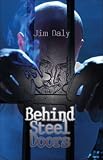
According to the book description of Behind Steel Doors, “in
this book the reader will be allowed to visit the dark side of jail and what goes on inside one. It is about hard-core prisoners
who have nothing to lose, the games they play, and how they assault fellow prisoners or brave jailers. It includes responding
to emergency calls, and how all the madness builds up behind the big steel doors of jail for prisoners and jailers alike.
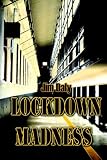
This book will definitely show some statistics reported and incidents that have occurred.” According to the book description of Jim Daly’s book Lockdown
Madness, “step inside the walls of one of the largest correctional facilities in the United States and
the madness experienced by not only the inmates but also the men and women who are charged with guarding them. This book details
the career of a former Marine and U.S. Army National Guardsman who devoted his entire career to protecting society from murderers
and rapists, drunks and drug addicts. The stories told in this book are true, and the author makes no apologies for the language
and the violence that occurred inside the living, breathing demon known as a jail. Come inside, if you dare!”
According to one reader of Lockdown Madness,
“After reading this book, I began to wonder how someone could spend so many years working in a jail and not lose their
mind. In my nearly 14 years as a police officer I have arrested hundreds of people and had to deal with their antics for maybe
a couple of hours at a time, so I cannot fathom working inside a jail and dealing with it for 8, 10 or 12 hours a day. It
truly takes a special person to be able to put up with the violence and insanity inside a jail or prison, and my hat goes
off to those men and women who are able to do it, day in and day out. If you have ever wondered what it is like to spend time
in jail, then you MUST read this book!”
According to one reader of Lockdown Madness,
“Jail is no fun place to be. but you have to give respect to those willing to protect us from the bad guy's being a
former jail deputy I can say that this book is dead on the money. the author did a excellent job.”
According
to one reader of Lockdown Madness, “Lockdown Madness written by Jim Daly has to be
one of the most informative and intriguing books that I have ever read on what it is like in the jails across America. Jim
Daly has written a no holds barred book about actual events that he has witness as a jailer. The stories that Jim Daly relates
in Lockdown Madness are shocking, reveling and exciting. Some of the stories will make you laugh and others will make you
realize just how mean and cruel some people really are. This book will enlighten you as to what happens in the life of jailer,
as they have to deal with some of the most vile, rudest, and worst people that society has to offer. I have visited some on
death row, in medium and minimum-security prisons and in jails across Oklahoma and I can attest to the truthfulness of the
events in this book as I have witnessed some of what Jim Daly talks about. Lockdown Madness will help you realize just how
fortunate we are to have people like Jim Daly who sacrifice so much to keep society safe from all kinds of offenders. Lockdown
Madness is truly an eye-opener and a book that I highly recommend that you put on your must read list.”
According
to one reader of Lockdown Madness, Lockdown Madness is an absolute thriller. His experiences
working as an Corrections Officer will surely grip any readers attention. Throughout his book he dealt with some of the most
dangerous ruthless criminals incarcerated in the corrections facilities. One mistake with these folks meant certain injury
or death for the corrections officer. The book is very informative on Correction policy and guidelines. Action packed and
a great thriller for all readers who like Law Enforcement stories.”
According to one reader of Lockdown Madness,
“AWESOME, eye-opener. Never gave jail a thought, it was a place to lock up the bad guys. You feel you are right there
and you have insight of what goes on IN THE CELL. Humorous too. Great book and I am looking forward to his NEXT book!”
According
to one reader of Lockdown Madness, “This is an extraordinary Book! I spent years being
the wife to an inmate and heard of stories from my husband like those of this author. To hear the side of the jailer is an
extreme eye-opener and demands respect to those who live there lives with the sickest of all human beings! The Author is very
truthful and open as he takes you threw years of his life. I found myself laughing out loud, and other times holding my breath!
I read 75% of the book the first time i opened it! it's a book you will want to read till you finish. This book will be read
more then once by me. Wonderful Job Author, looking forward to your next book!”
According to the book description of
We Stand our Ground, “The United States Marine Corps was formed at Tun Tavern in Philadelphia
November 10, 1775. Since that time, Marines have fought and sacrificed their own in every major battle and war. This book
is the author's own story of his experiences during MCRD Marine Corps boot camp in 1969, platoon #3137, San Diego. The reader
is fore-warned of strong coarse language and humorous content. Semper Fi.”
According to the book description of
Snake Craze, “Snakes are fascinating and sometimes very dangerous. This book brings too light
their world, why snakes are snakes, and a learning experience for all who seek information about them. This book has a beautiful
pictorial of most common snakes, and an emergency care guide in what to do if bitten by a snake.”
According to the book description of
The Dino Era, “This book is about dinosaurs and fossils, it is a pictorial and historical
account of what took place millions of years ago when dinosaurs ruled the Earth. This is an educational experience for most
people. 230 thousand years ago, dinosaurs began to roam the Earth, predator against predator, when it came time to hunting
their prey. This was a unique time in our history, a time of giants, and small predators alike, ferocious beasts of all sizes,
shapes, colors and character. Living and Surviving back then, millions of years ago, was dangerous, treacherous and the fact
that only the strong survived.”
According to the book description of
Restless Winds, it “is a book written about the Apache Warrior, their inspiring way of life
and history, some content is non-fiction and some information may vary as time goes on, due to new research or newly found
facts. There are additional stories and tales that will surely interest those readers who enjoy reading fine literature. Special
appreciation goes out to Purple Hawk for his historical insight and help.”
According to the book description of
Police Response to Domestic Violence, “This book is dedicated to all the Police Officers who
have given their lives in the line of duty while responding to Domestic Violence calls and to all the children, women, men
and elderly who fall victim to Domestic Violence every day. Most stories are horrific and brutal, while other cases lead toward
that outcome. I hope this training book Curriculum will explain some of the reasons Domestic Violence happens, and some solutions
that may help in preventing such acts of violence from occurring to you or others, and for possibly saving one's life. This
book is also a great training curriculum for any law enforcement agency.”
According to the book description of
Desert Storm: The Evil Threat, “2 August 1990, Iraq attacks Kuwait. This was a year that would
change the lives of many households in America. A dictator, Saddam Hussein, attacked the country of Kuwait with a devastating
force that over ran the country and any opposition it may have had. The 745 Military Police Company answered our country's
call like so many other units did, and that the time finally arrived, to stop this evil Iraqi force from raping, and killing
more innocent people. Over the years we have served with numerous other Military Police Units, the 89th Military Police Brigade
at Fort Hood, Texas, 82nd Airborne Military Police from Ft. Bragg, North Carolina, 21st and 401st Military Police - Nebraska,
the 549th Military Police in Panama, and the 403rd Military Police, whom we worked very close with, and many other outstanding
units.”
According to the book description of
Paradise Valley it “is a book about the author, growing up in his early years, and memories
of his family and friends during a golden and precious time he shared with family and friends.”
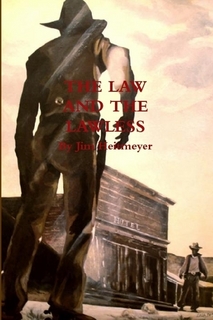
According to the book description of
The Law and Lawless, “This book will provide readers with how ruthless the Old West really
was, and who the main characters were. The truth is contrary to the stories that have been told over the years, as to how
they settled some of their disputes. The reader should find some interesting facts about the west, outlaws and the marshals
who enforced the laws during this cruel time in history, and in dealing with the odds.”
According to the book description of
Pyramada, “Egypt has always fascinated me by its countless mysteries and way of life years
ago, as it has numerous people in the world. Egypt is one of the most fertile areas of Africa, and one of the most fertile
of the countries around the Mediterranean Sea. Because it is so fertile, people came to live in Egypt earlier than in most
places, probably around 40,000 years ago. At first there were not very many people, but gradually Egypt became more crowded,
so there was more need for a unified government. Around 3000 BC (5000 years ago), Egypt was first unified under one ruler,
who was called the Pharaoh. This learning series will provide interesting facts and great insight to Ancient Egypt and findings.
From that time until around 525 BC, when Egypt was conquered by the Persians, Egypt's history is divided into six different
time periods. These are called the Old Kingdom, the First Intermediate Period, the Middle Kingdom, the Second Intermediate
Period, the New Kingdom, and the Third Intermediate Period.”
|