War on Terrorism

CLICK TO EXPLORE
CLICK TO EXPLORE

POLICE OFFICER GIFTS

MARINE CORPS GIFTS

NAVY GIFTS

ARMY GIFTS

AIR FORCE GIFTS

COAST GUARD GIFTS
 

Do you Know your Balance Type?

Take the BalanceGuide Survey, learn your BalanceType, and
get personalized balanced living ideas today.

Click here for the Survey

Police often have specialist units for handling armed offenders, and similar dangerous situations, and can often, in extreme circumstances, call on the military, sometimes including Special Forces like the SAS. They can also be equipped with non-lethal (more accurately known as "less than lethal" or "less-lethal") weaponry, particularly for riot control. Non-lethal weapons include batons, shields, riot control agents, rubber bullets and stun guns. The use of firearms or deadly force is typically a last reso

Police Officer Books

Juan Antonio Juarez

Home | By Police Department | By Police Officer | By Police Subject | Law Enforcement Books by State | Other Law Enforcement Writers | Annual Recognition | Watering Hole | Poetry, Prayers and More | Police Leadership | Police Officer Gifts | Contact Us | Book Reviews | Police and Law Enforcement News | Police Training | FAQs | Author Events | Link Directory | Advertise | Site Map

Trends, tactics and terrorism - Open Source Information for law Enforcement
Hi Tech Criminal Justice online
 Join our Newsletter
 Enter Your Email:
Privacy Policy

Visit the Chicago Police Department website.


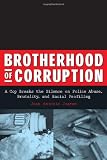
Brotherhood of Corruption: A Cop Breaks the Silence on Police Abuse, Brutality, and Racial Profiling
Juan Antonio Juarez  More Info

About the Chicago Police Department

On January 31, 1835, the State of Illinois authorized the Town of Chicago to establish its own police force.  On August 15, Orsemus Morrison is elected Chicago's first constable, assisted by Constables Luther Nichols and John Shrigley. The three-man police force serves and protects a population of about 3,200. The Police Department pre-dates Chicago as a city.


Today, the Chicago Police Department is the second largest in the United States, serving approximately 2.9 million residents within the 228 square miles that constitutes the City of Chicago.  The Chicago Police Department had, at the end of 2005, 13,323 sworn police officers and over 2,000 civilian personnel.


The Chicago Police Department is divided into 25 police districts.  Each district has between 9 and 15 police beats, with a total 281 beats throughout the city of Chicago. Each of the 25 police districts is led by a district commander who, in addition to uniformed police officers, has teams of undercover tactical and gang police officers at his or her disposal.  The Chicago Police Department Districts are organized into five larger organization entities called Areas.  These area commanders report to the Bureau of Patrol.


In addition to the Bureau of Patrol, the Chicago Police Department has four other bureaus: Bureau of Investigative Services; Bureau of Strategic Deployment; Bureau of Crime Strategy and Accountability; and, the Bureau of Administrative services.  Instead of a Chief of Police, the Chicago Police Department has a Superintendent of Police; and, the Bureau commanders hold the rank of Deputy Superintendent.

Juan Antonio Juarez worked seven years as a police officer for the Chicago Police Department. According to the American Library Association, Juan Antonio Juarez’ book, Brotherhood of Corruption: A Cop Breaks the Silence on Police Abuse, Brutality, and Racial Profiling, “offers a harrowing inside look at the corrupt practices used by police in enforcing drug laws and the blue wall of silence that insulates them. No angel as a youth, Juarez jumped at the chance to become a cop, like his father, and the opportunity for stability, job security, and maybe a chance to correct some social ills. As a member of an elite narcotics unit, what he found instead were glaring inequities--repeated busts of street-corner dealers but a blind eye toward the dealing and use of drugs in more rarefied circles.


Juan Antonio Juarez witnessed police abuse of power, beatings of suspects, sexual abuse of female suspects, and repeated use of racial profiling in arrests and prosecutions in the war on drugs. He succumbed to temptation and joined his colleagues in abuse and corruption. Disillusionment and his own personal demons eventually led to his downfall. This is a starkly revealing look at how urban policing oversteps the bounds of the law in the so-called war on drugs.”  Juarez is currently an author and middle school teacher.

© 2006 - 2008 Raymond E. Foster, Leadership in Hi Tech Criminal Justice


Criminal Justice Online

Home/Join | List | Next | Previous | Random

Sponsored by Criminal Justice Online

© 2006 Hi Tech Criminal Justice, Raymond E. Foster

Disclaimer