|
His academic credentials include an Associate in Arts
in Police Administration, a Bachelor of Arts in Interdisciplinary Social Science, a Master of Arts in Political Science, and
a Doctor of Education.
Dr. Leonard Territo has coauthored some of the leading
books in the law enforcement profession including: Police Civil Liability; Police Administration;
Stress and Police Personnel; The Police Personnel Selection Process; Crime
and Justice in America; Hospital and College Security Liability; and, College
Crime Prevention and Personal Safety Awareness. His books are presently being used in over 950 colleges and
universities in 50 states and he has had numerous articles published in nationally recognized law enforcement and legal journals.
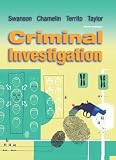
According to the book description of
Criminal Investigation, it “is recognized as the most accurate, comprehensive, and practical
book in its field. This updated edition examines the latest investigative methods and technologies with new information on
white-collar crime, drugs, terrorism, and homeland security. The simulation CD contains interactive modules covering the investigative
process.”
One reader of Criminal
Investigation said, “This book is by far one of the best of the criminal justice books that I have ever
read. If it wasn't required reading for my Criminal Investigations class, I just might have picked it up and read it on
my own. This book is one of the most interesting and easy to read books that has ever been required reading. The photography
in the text helps with the topics in the reading much more than in any other books I've read. Though a bit gruesome, the
photos are of great quality and only help the book that much more.”
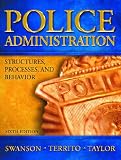
According to the book description of
Police Administration: Structures, Processes and Behavior, “The best-selling, most comprehensive
book available for police administration and management, Police Administration 6/e presents a carefully researched and vivid
introduction to police organizations that focuses on the procedures, politics and human relations issues that law enforcement
managers and administrators must understand in order to succeed. Representing the collective experience of the authors'
decades of experience in law enforcement, training, and teaching, Police Administration 6/e is recognized by both the academic
and law enforcement communities as the authoritative treatment of this important topic. Chapter topics include the evolution
of American policing, community policing, organizational theory, concepts of police organizational design, leadership, organizational
and interpersonal communication, human resource management, stress and police personnel, labor relations, legal aspects of
police administration, planning and decision-making, financial management, and organizational change and the future. For law
enforcement managers and administrators.”
According to the book description of
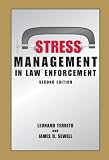
Stress Management in Law Enforcement, “Crime and its far-reaching effects are major topics
of concern at the state, local, and national levels. One of the effects not always considered is the daily stress faced by
law enforcement personnel. This book is a carefully edited collection of 35 leading articles and selections on stress and
its consequences for police personnel. It covers a variety of topics related to stress in the law enforcement environment:
Understanding Stress, Stress and the Police Officer, Police Suicide, Stress in the Police Family, the Trauma of Law Enforcement,
Coping with Stress, Psychological Services for Law Enforcement Personnel, and Management Issues in Dealing with Police Stress.
Each of these sections is preceded by a brief summary to assist the reader in identifying articles that might be of particular
interest.
This book will be of specific interest
to the academic community as an adjunctive resource in police management courses or as a text in upper-division seminars that
deal specifically with this topic. Secondly, the book will be of considerable interest to police administrators who must deal
on a daily basis with the negative side effects of stress on their officers. Finally, this book will be helpful to police
officers who work on the street and who are regularly exposed to violence, cruelty, aggression, and the resulting stress they
induce.”
According to the book description of the 7th
edition of Police Administration, “The best-selling, most comprehensive book available for police administration
& management, Police Administration 7/e presents a carefully researched and vivid introduction to police organizations
that focuses on the procedures, politics and human relations issues that law enforcement managers and administrators must
understand in order to succeed. Representing the collective experience of the authors' decades of experience in law enforcement,
training, and teaching, Police Administration 7/e is recognized by both the academic and law enforcement communities as the
authoritative treatment of this important topic.”
|