War on Terrorism

CLICK TO EXPLORE
CLICK TO EXPLORE

POLICE OFFICER GIFTS

MARINE CORPS GIFTS

NAVY GIFTS

ARMY GIFTS

AIR FORCE GIFTS

COAST GUARD GIFTS
 

The origin of the British police lies in early tribal history and is based on customs for securing order through the medium of appointed representatives. In effect, the people were the police. The Saxons brought this system to England and improved and developed the organisation. This entailed the division of the people into groups of ten, called "tythings", with a tything-man as representative of each; and into larger groups, each of ten tythings, under a "hundred-man" who was responsible to the Shire-reeve

The task
                              of organising and designing the "New Police" was placed in the hands of Colonel Charles Rowan and Richard Mayne
                              (later Sir Richard Mayne}. These two Commissioners occupied a private house at 4, Whitehall Place, the back of which opened
                              on to a courtyard. The back premises of 4 Whitehall Place were used as a police station. It was this address that led to the
                              headquarters of the Metropolitan Police being known as Scotland Yard. The exact origin of the name is not clear and the following
                              two stories have both gained credence at various times

Police Officer Books

Marty Ludas

Home | By Police Department | By Police Officer | By Police Subject | Law Enforcement Books by State | Other Law Enforcement Writers | Annual Recognition | Watering Hole | Poetry, Prayers and More | Police Leadership | Police Officer Gifts | Contact Us | Book Reviews | Police and Law Enforcement News | Police Training | FAQs | Author Events | Link Directory | Advertise | Site Map

Trends, tactics and terrorism - Open Source Information for law Enforcement
Hi Tech Criminal Justice online
 Join our Newsletter
 Enter Your Email:
Privacy Policy

Marty Ludas retired after thirty years of consecutive service working as a forensic examiner with three different law enforcement agencies. He received his initial fingerprint instruction during his employment with the FBI’s Identification Division in 1972. Later, while assigned as a special agent in the North Carolina State Bureau of Identification Latent Print Section, he completed an apprentice training program in crime scene investigation and latent fingerprint and footwear examination. In 1982 he gained employment as a latent print examiner at the City County Bureau of Identification in Raleigh North Carolina. He remained at this department until he retired. Marty is certified by the International Association of Identification in two forensic disciplines, latent print identification and footwear identification. He graduated from Wake Technical College with an Associate in Arts, Police Technology and from North Carolina Wesleyan College with a Bachelor of Science in Criminal Justice.

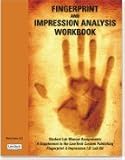
A photograph of the book fingerprint and impression analysis by civilian police personnel turned writer, Marty Ludas.
Click the photograph for more information on Fingerprint and Impression Analysis.

FINGERPRINT & IMPRESSION ANALYSIS

This manual is the companion workbook for the LawTech Custom Fingerprint & Impression Identification (I.D.) Lab Kit. The I.D. Lab Kit and Workbook together provide a new classroom training agenda of evidence collection, examination and interpretation with a concentration on Criminalistics and an introduction to forensic analysis. Learning is initiated through the presentation of instructor lectures using specialized training aids and actual criminal case histories. Linked with this instruction is the hands-on or operational phase, where students must complete a number of assignments using the I.D. Kit. During these labs, students utilize their inventory of equipment and supplies while conducting the assignments.

© 2006 - 2008 Raymond E. Foster, Leadership in Hi Tech Criminal Justice


Criminal Justice Online

Home/Join | List | Next | Previous | Random

Sponsored by Criminal Justice Online

© 2006 Hi Tech Criminal Justice, Raymond E. Foster

Disclaimer